The government’s prevention green paper highlights that becoming more active is good for our mental and physical health, and reduces our risk of developing a number of health conditions. It also sets out the ambition of getting everybody active in the 2020s, including those of us who are already living with a health condition.Read the full editionContinue reading “Today Public Health England launched a new edition of Health Matters focusing on how physical activity prevents and manages long-term health conditions.”
Author Archives: caleley
Tip for building an exercise habit; use a conditioned cue at beginning of workout followed by encoding of personal intrinsic reward to exercising.

…if you don’t see the external results you want quickly enough, you’re likely quit. This is why habit formation is essential to creating life-long behavioral changes.Full article 💡 https://www.psychologytoday.com/gb/blog/the-athletes-way/201609/one-two-punch-cue-and-reward-makes-exercise-habit
Outdoor natural environments labelled as ‘natural medicine’…
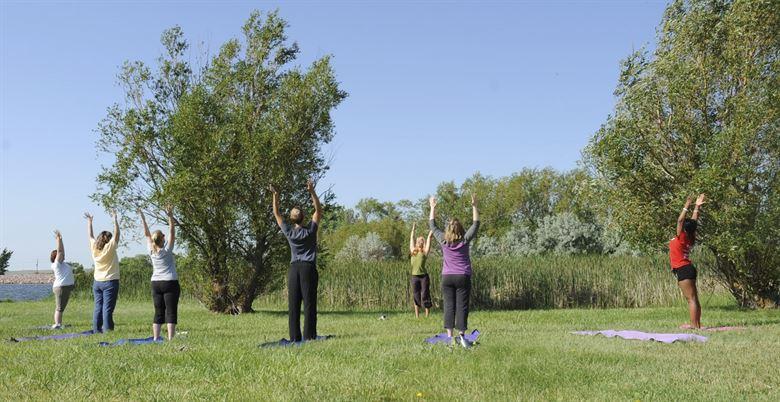
Outdoor natural environments labelled as ‘natural medicine’, providing physical activity levels with lower levels of perceived exertion, stress reduction, restoring mental, fatigue, improving mood, self-esteem and perceived health.Full article 🌳 https://extremephysiolmed.biomedcentral.com/articles/10.1186/2046-7648-2-3
Immediate rewards shown to be the strongest predictor of persistence and adherence when in pursuit of long term goal-related activities.

Overall, whereas delayed rewards may motivate goal setting and the intentions to pursue long-term goals, a meta-analysis of our studies finds that immediate rewards (eg. enjoyment) are more strongly associated with actual persistence in a long-term goal.Full article 🛍️ https://journals.sagepub.com/doi/full/10.1177/0146167216676480
Top psychological tips for fitness motivation include; buddying up, upbeat playlist, small process based goals, eating clean and convenient workout times.

Still, note that not all exercise partners are created equal. Psychologists and fitness experts alike agree that choosing someone with a compatible schedule, fitness goals, and temperament is ideal.Full article 😁 https://www.byrdie.com/how-to-get-motivated-to-work-out
A few well-defined short-term goals is the key to maximising chances of achieving them.

Behavioural economist Dr Shahram Heshmat suggests setting a few well-defined short-term goals that are a series of doable immediate tasks is the key to maximising chances of achieving them.Full article 🥅 https://www.psychologytoday.com/gb/blog/science-choice/201704/7-tips-setting-achievable-goals
Exercising at 70 – 80% of max HR is the optimal zone for maximum endorphin release.

Aerobic exercise is known to activate the body’s stress response, the hypothalamic-pituitary-adrenal (HPA) axis, and yet many people engage in sports like running because they perceive its effects as relaxing. Solving this apparent contradiction calls for a distinction between “good stress” and “bad stress,”…Full article 😺 https://www.ncbi.nlm.nih.gov/pmc/articles/PMC4703784/
Listening to your favourite music during low intensity exercise can decrease stress

Listening to your favourite music during low intensity exercise at 40% of VO2 max E.g. walking or jogging, can decrease stress caused by fatigue therefore increase comfort and enjoyment.Full details 🎵 https://scholar.google.co.uk/scholar?hl=en&as_sdt=0%2C5&as_vis=1&q=effect+of+music+on+heart+rate+when+exercising+&btnG=#d=gs_qabs&u=%23p%3Dp1PpsJBIbX0J
Training at a heart rate of approximately 150bmp for 30 mins daily significantly improves maximum oxygen uptake and working performance.

The exercise you do today, research shows, can save your brain from dementia later in life.
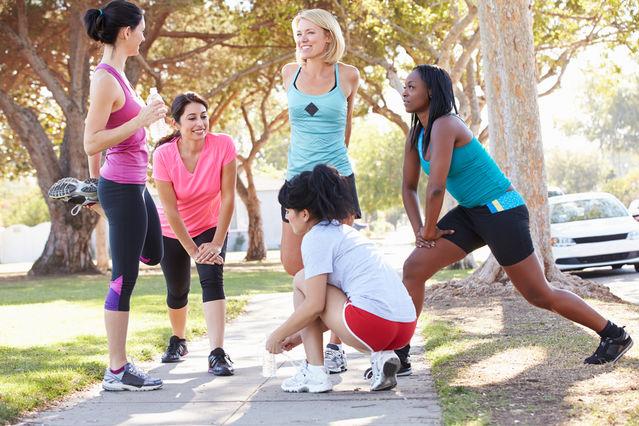
Physical fitness is generally linked to improved brain health, even to the degree of providing some protection against the debilitating effects of dementia.Full article 😅 https://www.psychologytoday.com/us/blog/neuronarrative/201806/why-it-pays-brain-dividends-stay-fit-in-middle-age
 jobupt.black